Benjamin Asante
About the artist
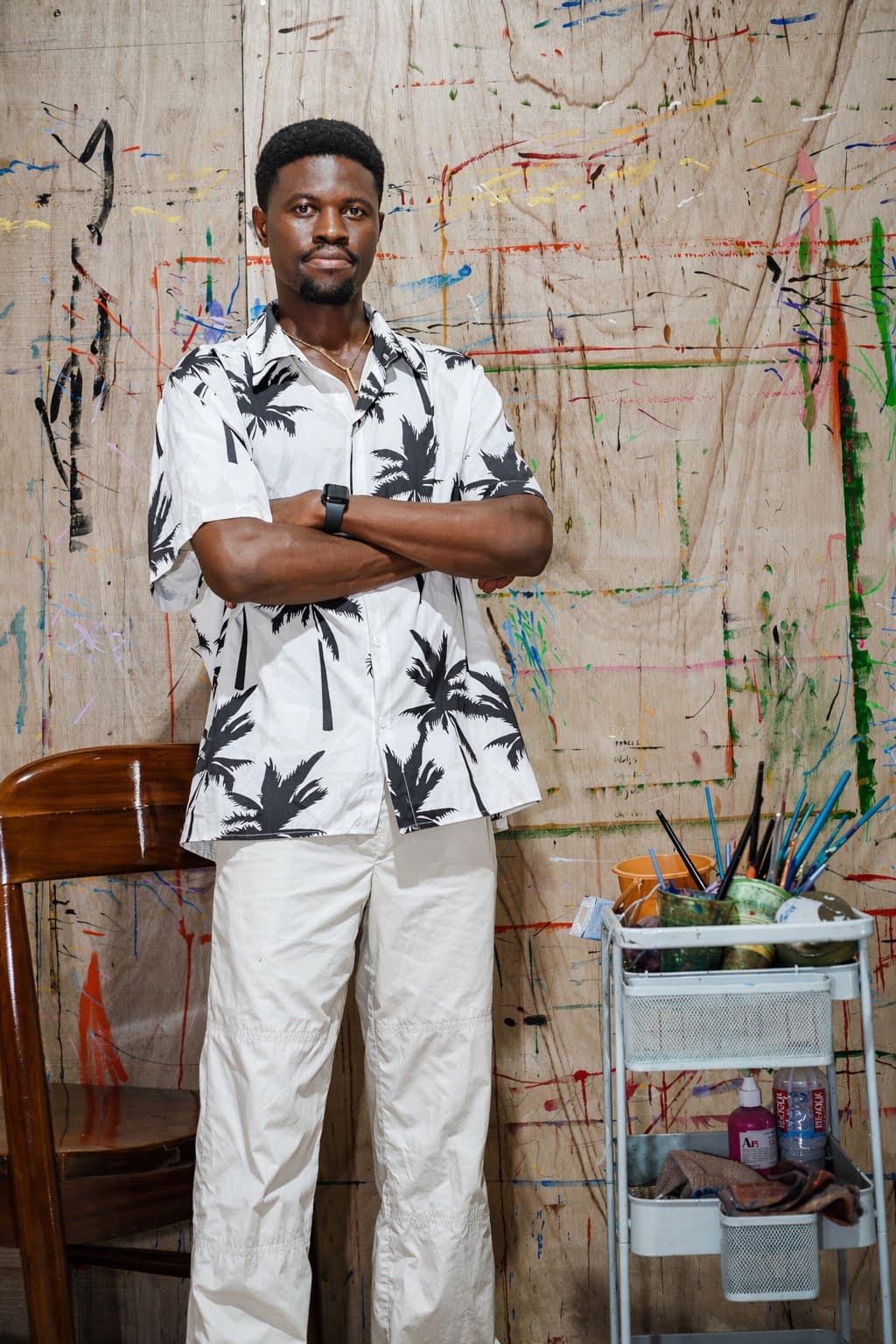
BnMArts is the studio identity of Benjamin Asante, an Accra-based contemporary artist whose paintings and yarn-based collages consider peace, introspection, and beauty within uncertainty.
- Location
- Accra, Ghana
- Born
- August 1995
- Education
- Ghanatta College of Art and Design, completed 2015
Biography
Benjamin Asante is a contemporary visual artist based in Accra, Ghana. Working through painting and yarn-based collage, he builds calm but psychologically alert images that hold beauty, uncertainty, and self-possession in the same frame.
His relationship with art began in childhood through drawing. Animated scenes, sketched from memory and repeated by hand, became an early discipline in gesture, character, and atmosphere. That instinct for close looking later developed through formal training at Ghanatta College of Art and Design, completed in 2015.
Earlier studio years included a semi-abstract phase in which colour, rhythm, and fragmentation carried much of the emotional charge. An early figurative chapter, remembered through the series title Women in Triumph, points to a sustained commitment to the figure before the later bodies of work became more formally defined.
Over time, the work moved toward figuration with greater conceptual precision, first through socially observant paintings and later through a quieter, more distilled language in which presence, pause, and refuge became central.
Yarn functions in the work as both material and metaphor. It introduces touch, labour, and continuity, while also suggesting care, patience, restraint, and the slow assembly of an inner life. Assistantships with artists including Cornelius Annor and Araba Opoku, along with independent studio practice in Accra, have shaped a discipline that is materially attentive and conceptually measured.
Themes
- Peace within uncertainty
- Introspection and emotional clarity
- Resilience and self-possession
- Stillness as refuge
- Thoughtful observation of contemporary life
Material language
Asante treats yarn as a quiet structural device rather than decoration. It threads through garments, braids, and spatial accents, adding tactile rhythm and symbolic weight tied to care, patience, continuity, and emotional control.
Process
- References are gathered from lived observation, fashion and music culture, and photographs that carry a charged but understated sense of character.
- Initial drawings clarify pose, balance, and the emotional temperature of each composition before paint is resolved.
- Figures are painted with measured tonal control, allowing garments, skin, and atmosphere to remain composed rather than theatrical.
- Yarn or crochet thread is introduced selectively, often within costume, hair, or key passages of structure, before the full surface is refined into a cohesive image.
Artistic Evolution
From drawing and semi-abstraction to woven figurative stillness.
Benjamin Asante's artistic development reads as a coherent progression. Childhood sketching, including repeated drawings shaped by animated scenes, established an early commitment to line, gesture, and character. A later semi-abstract phase explored atmosphere and fragmentation before the work moved toward figuration. That movement first emerged through the empathetic, socially observant portraits of This Is Us, and later matured into the quieter, more introspective material language of Woven Sanctuaries.
Childhood Drawing
A sustained interest in sketching began early, especially through animated scenes and characters translated into pencil drawings.
Semi-Abstract Beginnings
An earlier painting phase explored fragmentation, colour relationships, and abstraction as a way of building emotional atmosphere.
Women in Triumph
An early figurative series that signals Benjamin Asante's longstanding interest in presence, embodiment, and the dignity of the painted subject before the later studio language fully took shape.
This Is Us
The practice moved into socially observant figuration through portraits of people often misread because of styling, adornment, or self-expressive appearance.
Woven Sanctuaries
The current direction deepens that figurative language into quieter images of refuge, introspection, and materially refined stillness.